Featured post

Einblicke von oben - über bühnenreife Szenen unserer kleinen Tüpfeladler - 2025

Das Porträt stellt vor: „Eddie“ the Eagle. 04. August 2025, Landkreis LRO. Abb. 1:  Jungadler "Kalle" im Alter von 34 Tagen währe...

Saturday, August 20, 2011

Caspian Terns migration and metal ring readings "Lake Kummerow 2011"


Between 04th August till 15th September 2011 passed in total approximately 650-700 Caspian Terns the Lake Kummerow in Mecklenburg-Western Pomerania!


I studied 632 Caspi's in more detail :

  • 462 Ind. > 1.cy (73,1 %) and 170 Ind. 1.cy (26,9 %)
  • thereof 247 Ind. metal rings (39 %)
  • thereof 177 Ind. > 1.cy (71,7 %) and 70 Ind. 1.cy (28,3 %)
  • thereof 142 Ind. from Sweden (57,5 %) and 105 Ind. from Finland (42,5 %)
  • 138 readings of metal rings with 70 different birds incl. three Finnish and two Swedish colour-ringed Caspi's: 

  • ad. yellow "CCJ8" (27.08.-01.09.11) 
  • 1.cy yellow "CHL" (29.08.-09.09.11)
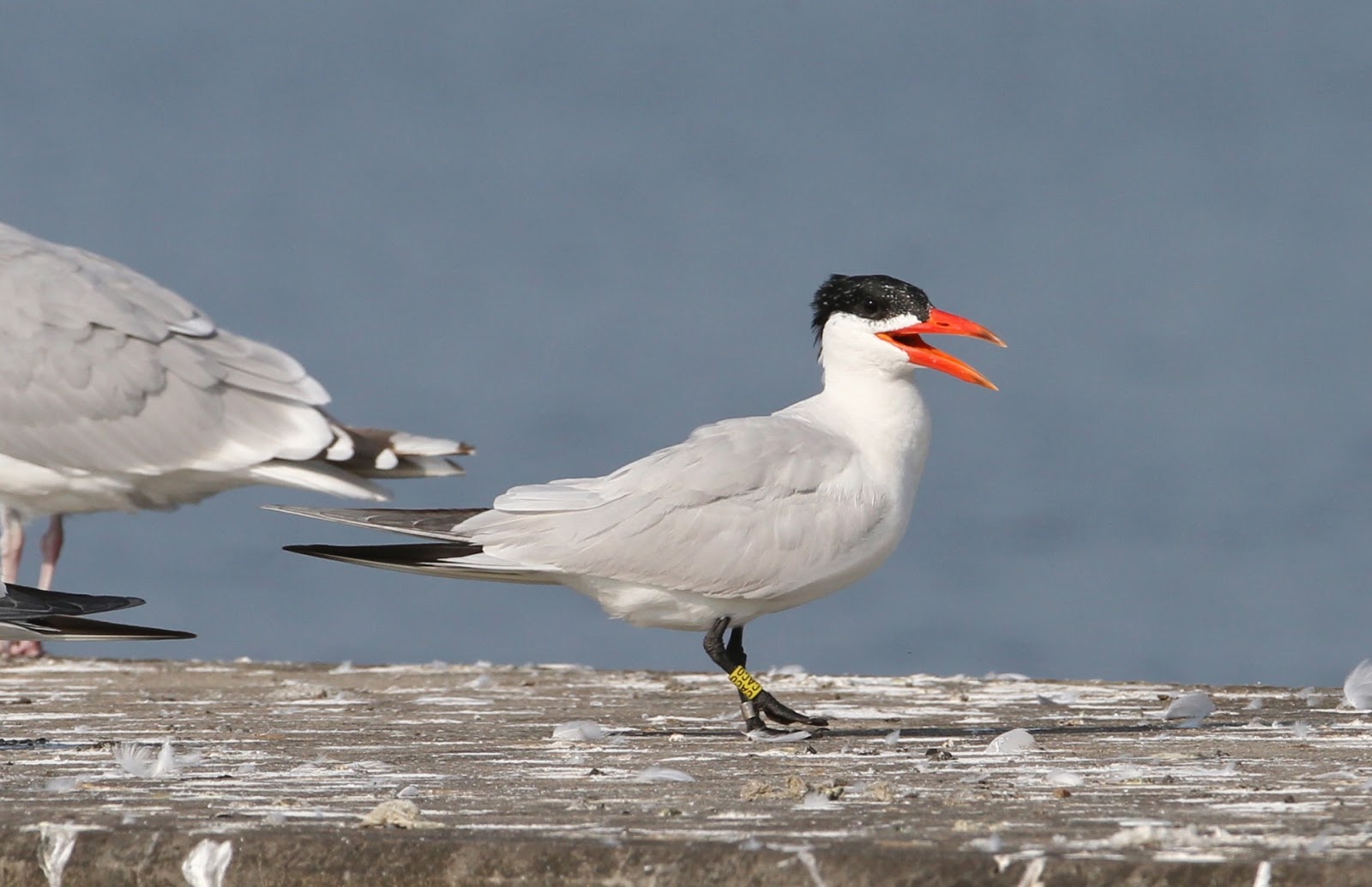
  • ad. yellow "CACO" (03.09.11)
  • 1.cy red "AC2" (09.09.11).
  • 1.cy red "AA9" (12.-14.09.11)

BTW: The young Finnish Caspian "CT-097.099" with a long interesting stay for three weeks on Lake Kummerow (25.08.-14.09.11) - 12.09.2011 - © C. Rohde

Sorry, I work with Macintosh - somtimes problems with the Layout by Windows....
My "Caspian Tern season" has started since early of August on Lake Kummerow. 
In the next days you can find information about the migration and metal ring readings of "Caspi's". 
The migration usually starts on Lake Kummerow with Swedish Caspi's. 
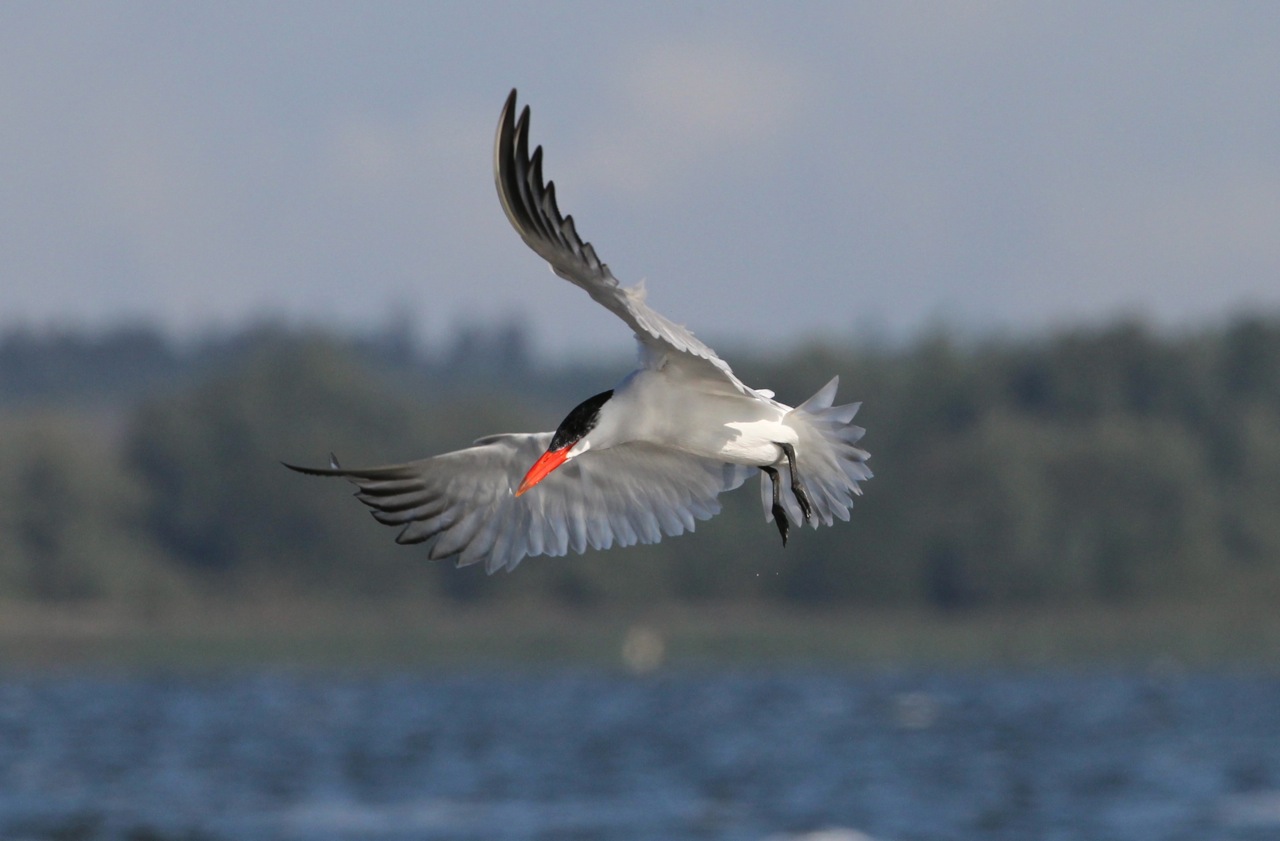
Image above see you a young finnish Caspian and image below an ad. bird, Lake Kummerow both on 01.09.2011 - © C. Rohde.
The beautiful Caspian Tern - Lake Kummerow 01.09.2011 - © C. Rohde
Note the metal ring on the right leg. This Caspian is from Finland with code "CT-091.924". I saw the same bird on 02.09.2010 on the same location! Lake Kummerow 16.08.2011 - © C. Rohde
My first red colour-ringed Swedish Caspian "AC2" on Lake Kummerow, 09.09.11 - © C. Rohde.
Red colour-ring "AC2" is clearly visible - 09.09.11 - © C. Rohde.
The young Caspian Terns are still provided to the passage of a parent. Lake Kummerow 01.09.2011 - © C. Rohde.
Here you can see my second colour-ringed Swedish "AA9". But the ring is in some positions difficult to classify. It can also be read as "6VV"! Lake Kummerow 12.09.2011 - © C. Rohde.
Lake Kummerow 01.09.2011 - © C. Rohde
Parasites lurking....01.09.2011 - © C. Rohde
Minimum three Caspi's on the picture have a metal ring. In the center also the young Tern. Lake Kummerow 20.08.2011 - © C. Rohde.
Right the ad. Caspian from Finland with metal ring "CT-105.213", Lake Kummerow 01.09.2011 - © C. Rohde
Evening atmosphere with the Caspi's and mosquitoes.....Lake Kummerow 16.08.2011 - © C. Rohde
Two finnish yellow colour-ringed Caspi's on 30.08.2011 - Left "ad. "CCJ8" and right 1. cy. "CHL" -  © C. Rohde.
1.cy "CHL" Lake Kummerow on 01.09.2011 - © C. Rohde
"CCJ8" Lake Kummerow on 01.09.2011 - © C. Rohde
The autumn migration route of "CCJ8". 1017 km between birth place in Finland and the reading place near Demmin (Lake Kummerow) in NE-Germany.
Finnish Caspian "CACO" arrived on 03.09.11 Lake Kummerow (since 2008 between 29.08. and 02.09.) - © C. Rohde
"CACO" togehther with "CT-0???" (bottom) both from Finland (disturbed by one boat) 03.09.2011 - © C. Rohde
The best migration of Caspians is during a strong westerly wind. Typical - End of August, the Finnish Caspian Terns are in the majority.....
An example of a counting on 30.08.11 (Lake Kummerow): ∑ 52 Caspians - of them are 36 ad. birds (16 with metal ring) and 16 1.cy birds (8 with metal ring). 18 metals from Finland and only 6 from Sweden - © C. Rohde.

Friday, July 29, 2011

Black Stork colour-ring-recoveries 2011

This post gives interesting information about future ring readings in Germany and Israel since summer/ autumn 2011.


Ring scheme of German plastic white colour-ring with code "Txx" or "Txxx" (left side with 4 cm length) and German metal/ plastic rings from the three Bird Ringing C. (right above "Helgoland metal" length 2 cm, under that second kind of "Helgoland metal" 1,5 cm for Northwest-Germany, under these "Hiddensee metal" length 1,2 cm for East-Germany and below a special kind of "Radolfzell" with the black plastic ELSA-ring length 3,5 cm for South-Germany).
Counter for 208 banded 1. cy German Black Storks 2011 -
recoveries 1. cy BS after fledging; 
updated 23.10.2011: n= 33 (different Ind.) 
- the first recovery in Spain on 07.09.11 (T272)
- the second recovery in Spain on 12.09.11 (T292)
- the third recovery in Spain on 21.10.11 (T317)

The first great recovery in Thuringia in July:
On 27. July 2011 saw Simone Hauptmann (Arnstadt) a really big group of BS (6 ad., 15 juv.) near Ohrdruf (Lake Schwabhausen).
5 of 15 juv. had a colour-ring (CR). Simone could read them all:
T216, T217, T218, T219 and T309 (all German BS) from three different nests in Saxony-Anhalt!


The distances of recoveries were between 150 - 170 km SW from the three breeding places (western flyway). On 23. July were the BS "T218" and "T219" still on the nest (G. Röber).
Ringing on 10.06.2011 - four chicks "T218-T221" in Saxony-Anhalt - meeting on 27.07.2011 in Thuringia with other neighboring BS, going SW-route - © C. Rohde.
Ringing on 10.06.2011 - three chicks "T215-T217" in Saxony-Anhalt - only 10 km distance to the nest of "T218-T221", going SW-route - © C. Rohde.
Ringing on 21.06.2011 - four chicks "T306-T309" in Saxony-Anhalt - only 8 and 18 km distances to the nests from "T215-T217" and "T218-T221". A really important recovery for the SW-flyway of BS population in Saxony-Anhalt - © C. Rohde.

The second recovery is, unfortunately, victims of electrocution. "T173" was born in the Franconian Forest (Bavaria) and ringing on 20.06.2010 together with three other siblings.
401 days after the ringing found Oliver Paul the BS "T173" under the power lines near Sinzendorf (Bavaria). It was a typical mark of electrocution. The proof was around 160 km SE from the birthplace (see Google Earth image below). The BS was in the meantime already in the second calendar year! Again a tragic case.

Typical breeding sites in the Franconian Forest. In the spruce forest is located the nest. Look closely at the picture, then you can find the nest ..., 20.06.2010 - © C. Rohde.
"T173" is located right on the nest ground, only "T172" shows photogenic.... 20.06.2010 - © C. Rohde.

The next overview shows the settling behavior of the BS "TL8". I have him on 17.06.2008 ringed in Thuringia (4 chicks). Four years later, the bird has meanwhile sexually mature, it is observed from P. PODZEMNY on 09.06.2011 in the Czech Republic on the border with Slovakia and Austria during the breeding season. A breed is very probably in the region. The settlement would located 530 km ESE from the birth place of "TL8". Great recovery of German BS!

Now the next interesting recoveries of 1.cy German BS in overview:
  • "T213" ringing 09.06.11 in Mecklenburg-Western Pomerania (4 juv., C. Rohde) - reading alive 28./ 29.07.2011 in Belgium, 500 km WSW (J. POTTIER, J. DUA)
  • "T299" ringing 16.06.11 in Hesse (5 juv., C. Rohde) - reading alive 29.07.11 in Netherlands, 260 km WNW (J. SLAATES)
  • "TT9" a sibling of "T299" - reading alive 03.08.11 in Netherlands, 423 km NW (L. ANEMA, K. DE JONG)
  • "T9A" a sibling of "T299" and "TT9" - reading alive 07.08.11 in Netherlands, 425 km WNW (P. DHALUIN)
  • "T304" ringing 20.06.11 in Thuringia (3 juv., C. Rohde) - reading alive 31.07.11 in France ("Lac d'Auzon-Temple"), 525 km SW (F. CROSET)
  • "T305" a sibling of "T304" - reading alive 23.08.11 in France (Saint Viatre), 730 km SW (B. RIOTTON-ROUX) 
  • "T332" ringing 25.06.11 in Brandenburg (5 juv., C. Rohde) - reading alive (but weakened found) 31.07.11 in Baden-Wurttemberg, 533 km SW (Mr. NUSCHELE) - in the meantime (04.08.11) died!
  • "T208 - T210" ringing siblings 09.06.11 (3 juv. C. Rohde) - reading alive 31.07.-02.08.11 in Mecklenburg-Western Pomerania (border to Poland), 171 km ENE (J. KRAATZ & N. WARMBIER), on 10.08.11 still around here
  • "T306" a sibling of "T309" (see top), ringing 21.06.11 in Saxony-Anhalt (4 juv., C. Rohde) - reading alive 04.08.11 in Hesse, 245 km SW, on 06.08.11 died (W. LÜBCKE, W. LIMPINSEL)
  • "T322" ringing 21.06.11 in Brandenburg (4 juv., C. Rohde) - reading alive 30.07.11 in Bavaria, 610 km S (M. THOMA), second recovery alive 14.08.11 in Bavaria, 68 km E from first reading place (F. FISCHER).
  • "T320" a sibling of "T322" - reading alive 03.-09.08.11 in Rhineland Palatinate, 530 km SW (C. LEIBISCH)
  • "T221" a sibling of "T218" and "T219" - reading alive 06./07.08.11 Netherlands, 370 km WNW (D. MEIJER, M. DE VRIES and more), then reading alive 06.10.11 in France (Le Gros Coef), 1160 km SW (G. PERRUCHAS)
  • "T224" ringing 11.06.11 in North Rhine-Westphalia (4 juv., C. Rohde) - reading alive 03.08.11 in Netherlands, 275 km NW (R. BROUWER), then reading alive 21.09.11 in France (Mauriac), 800 km SW (A. LAFON)
  • "T310" ringing 21.06.11 in Saxony-Anhalt (3 juv., C. Rohde) - reading alive 06.-09.08.11 in Bavaria, 476 km SSW (S. SCHMID)
  • "T9N" and "T9P" siblings and ringing 16.06.11 in Hesse, "Vogelsberg" (4 juv., C. Rohde) - reading alive in a group of 20 BS (incl. 1 BS from Poland "1H56" and 1 BS from Czech Republic "61MX") 11.08.11 in Saxony-Anhalt (Elbe-Valley), 295 km NE (J. STEUDTNER & A. SCHONERT) - "T9N" with the second recovery on 20th August 2011 in France, 717 km SW from first recovery (J. BERNARD)
  • "T324" ringing 23.06.11 in Mecklenburg-Western Pomerania (3 juv., C. Rohde) - reading alive 06.-09.08.11 in Netherlands, 400 km WSW (R. MEESEMAKER)
  • "T203" ringing 02.06.11 in Mecklenburg-Western Pomerania (4 juv., C. Rohde) - reading alive 23.08.11 near Braunschweig (Lower Saxony), 165 km SSW (D. TAYLOR)
  • "T207" ringing 08.06.11 in Brandenburg (4 juv., C. Rohde) - reading alive 21.08.11 near Stuttgart, 487 km SW (W. MEYER) - Notes: this is 2011 the second 1.cy BS from Brandenburg born near the border to Poland with migration route to SW!
  • "T272" ringing 15.06.11 in North Rhine Westphalia (4 juv., C. Rohde) - reading alive 07.09.11 in Spain (prov. Teruel), 1400 km SW (J.A.B. MONTAGUT)
  • "T335" ringing 25.06.11 in Brandenburg (3 juv., C. Rohde) - reading alive 14.09.11 in France (Lac D'Orient), 792 km SW (S. GAILLARD)
  • "T268" ringing 14.06.11 in Hesse (3 juv., C. Rohde) - reading alive 10.09.11 in Netherlands, 230 km NW (L. STEEN)
  • "T292" ringing 16.06.11 in Hesse (5 juv., C. Rohde) - reading alive 12.09.11 in Spain (Rio Grande, Malaga - this is a known wintering site in Spain!), 1910 km SW (T. TODOROV, Info from C. PACHECO)
  • "T317" ringing 29.06.11 in Thuringia (3 juv., C. Riesmeier) - reading alive 21.10.11 in Spain (Ebro Delta, Amposta), 1400 km SW (J. I. TEJEDOR)

The first till third reading from German 1.cy BS in Spain 2011. 
"T272" was observed on 07.09.11 near Villarquemado - 1400 km SW birth place, the second "T292" was found alive at 12.09.11 near Coin - 1910 km SW birth place and the third "T317" was observed on 21.10.11 inside the rice fields near Amposta - 1400 km SW birth place.


The next proof for western flyway from Brandenburg (near Poland), "T335" flew 791 km SW.
Overview about the 1. cy BS 2011 with "Migration trend sector" from North West to South (n=18; by 18. August 2011)
Overview of siblings "T304" & "T305" born in Thuringia with slight different recoveries in France but with direction to SW.
Crazy tour of siblings "T299", "TT9" and "T9A" from breeding place in Hesse (Rhön) "meeting" around in the Netherlands.
The complete "Storklets" "T208-T210" go to East....Perhaps one case for easterly route and I see the nestlings in Israel...or return to West?
Route of siblings "T306" and "T309" with nest in Saxony-Anhalt - both go to SW...
"T322" from Brandenburg flying the first 600 km to south and reading 30.07.11 near "Kochel am See" (Bavaria), the same direction goes "T310" the first 476 km from Saxony-Anhalt and reading 06. till 09.08.11 near Gerolsbach (Bavaria).
Different routes of siblings from the breeding place in Saxony-Anhalt 2011 - "T221" flying 370 km WNW to the Netherlands (07.08.11) and "T218" & "T219" fly 160 km SW to Thuringia (27.07.11).
German BS seems indeed regularly to fly the Dutch and Dutch coast on their autumnal migratory route - like  "T221" & "T224", note first NW-direction! Then both BS were observed in France with direction SW!
Different routes of siblings from the breeding site in Brandenburg (Prignitz) 2011 - "T320" goes 530 km SW to Rhineland Palatinate and "T322" flying 610 km S to Bavaria. "T322" with the second recovery on 14th August, goes 68 km East.
The siblings "T9N" & "T9P" from the breeding site in Hesse fly after fledging 295 km to NE inside the Elbe Valley.
But in the meantime great news about "T9N" , he was seen from J. Bernard on 20th August in France with the complete new direction to SW - 717 km in almost 8 days - see Google Earth image below:

By the way - Very interesting recoveries of German BS in the second calendar year in France - autumn 2011 (n=5)! You can see the fact of the western route is very stable and is continue to boom (two documents of eastern BS in Saxony and Brandenburg).

"Harald" and the LSE breeding season 2011

Lots of rain in June-July and no voles in the meadows and fields dominate the Lesser Spotted Eagle (Aquila pomarina) breeding season 2011.
Regionally are available in Mecklenburg-Vorpommern very bad breeding success. Of the approximately 80 breeding pairs, according to recent results, there are around 38-40 juveniles. 
But these young Eagles are still far from fully fledged!
Andreas Hofmann and I ringed till now this year 34 young Eagles in Mecklenburg-Western Pomerania.


This young Eagle "HR" = "Harald" - was slightly malnourished - ringed on 6th July 2011 (2,5 weeks old) - © C. Rohde
3 weeks later - I found the Eagle "Harald" (he is a male) on the ground. He was dropped from the nest with 5,5 weeks and is of course still not fledged. He needed 2,5 weeks more.... "Harald" was still agile and must have been for at least 2-3 days provided with food at the ground of the adult birds (I found a mole). I reacted quickly and built a temporary "nest" on a root plate of a spruce at 1.5 m height.
His weight was a big problem (only 1000g!!). Not enough food in the region. Even if the adults brought food to the new location. Still too little ... In addition, the bird is not safe from predators on the ground. I had to respond the next day. The brood nest in the oak was alone very difficult to reached. 27.07.2011 © C. Rohde.


I built finally on 28.07.2011 this new nest on a spruce tree. "Harald" has during insertion defended - a good sign. A renewed problem is the continuous rain....28.07.2011 © C. Rohde.

Good news - on 30. July - "Harald" look from the spruce nest and is alive (last 24 hours more than 70 mm rainfall)!
I'm so happy...and hopeful! 
Over the next few days I check "Harald" and make new images.
And now, unfortunately, bad news. "Harald" is dead!
Today on 01. August - I found him dead under the nest, he must died shortly after my last inspection, where he has still lived and was supplied by the parents at the new nest.
We can certainly philosophize much.
 It is first in the sum of the food scarcity, the strong and continuous rain in the last days and previously rather bad condition of "Harald".


The following things are noticed by ringing in 2011:

  • the weight of the young birds were 10-15% below the long-term average
  • the start of breeding was on average about one week later than usual
  • often no adult birds were present by still small young Eagles (< 4 weeks), both ad. birds had to procure food...
  • not enough availability of voles as the main food, very few alternatives this year
  • heavy and long lasting rainfall in June-July 2011 (reg. ∑ 320-340 mm!!), the critical age of the young Eagles
For comparison: in 2010 there were 80 breeding pairs of LSE with 46 fledged young Eagles in MV (SCHELLER et al. 2010).
What a nice view for this young LSE on the top of the pine (see the nest with LSE in the center), Mecklenburg-Western Pomerania - 18.07.2011, © C. Rohde.